Voices calling, rejoicing, protesting, rebelling, chasing or chasing the ball. Voices from a multi-use field of a school, Institut-Escola Turò d’en Caritg. Little boys and girls use the field to play basketball, soccer, volleyball, and korfbal. We are greeted by a very young animator, his name is Suliman Ali. He tells us that he has been attending La Rotllana for many years and was originally a participant in the activities and now leads some workshops, including sports workshops. Waiting for the boys and girls to arrive, he tells us about the workshop we were invited to attend. It is a training workshop for young people who want to become youth leaders, which is called “Training for Leaders.” As the girls and boys arrive, Suliman introduces them to us. They are all very young, between 11 and 14 years old. We settle into a classroom and after some ice-breaking activities, Suliman hangs a paper man on the board and asks the girls and boys to think about what the main characteristics of a youth educator/worker should be. The girls and boys, separated into the two groups, begin writing on post-it notes. When the time is up, they are asked by Suliman to stick the post-its on the little man, associating the characteristic with a specific body part and then explain it to the others. Empathy, listening, collaboration, consistency, creativity, motivational skills, cheerfulness, flexibility, responsibility, emotion management, these are the words that came out of the reflections of girls and boys. During the brainstorming, everyone agreed that one of the main roles of the educator is to pacify the contexts in which he or she works, to build safe spaces for the young people with whom he or she relates, and then to be able to animate, accompany, and guide them in the different paths of life, and to be able to allow them to embark on a path in which they can grow and develop first of all humanly. One thing that I thought while participating in this workshop is that an educator has to be a person who is happy doing his or her job and who has to transmit this happiness, this positivity, this hope to others. I saw in Suliman a happy animator, willing to listen, to welcome, to accompany, and I saw in this small activity a great workshop for good educators, and I think it is essential to inform and train the young people we work with on educational processes, because one day they too will be able to do it with the youngest children, activating a generational chain, able to involve the whole neighborhood, the whole city as an active educating community. And then often those who have gone through similar experiences are the best people to relate to those who live in the same context.
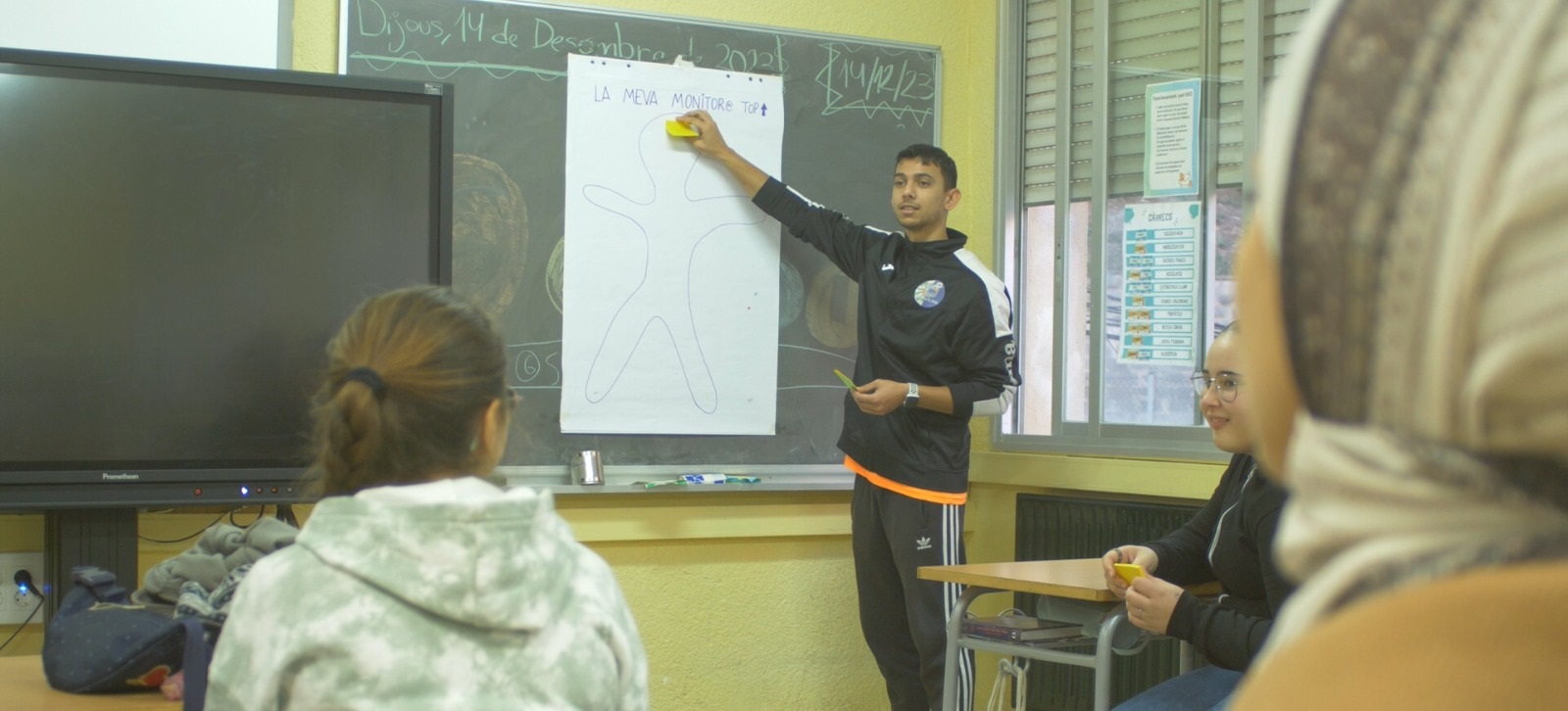
Training for leader
by Matteo di Fioreon Posted on
